
STELA: the laser that drives industrial efficiency
Can laser manufacturing become a smart, connected process? That is the question answered by STELA, a project that marks a milestone in Industry 4.0 and digital photonic production. Its objective: to take sub-millimetre-scale materials microprocessing to a new level by integrating advanced laser technology, sensing, continuous monitoring and intelligent analysis into a single platform.
The challenge is ambitious. STELA seeks to optimise operations such as texturing, micro-perforating and laser marking in sectors as diverse as automotive, water treatment and food.
The goal? Improve repeatability, reduce consumption and minimise errors compared to conventional methods.
Real-time data connection, AI and lasers
Within the consortium, Izertis leads the development of a robust and reliable solution for the digital control and analysis of laser manufacturing systems, addressing the needs of the project in terms of cost, simplicity, generalisation and speed.
To achieve this, Izertis integrates advanced software, artificial intelligence algorithms and optimised data architecture. This combination enables intelligent, digitised process control, from design to real-time information management during manufacture, thus controlling not only the quality of the manufactured parts, but also the laser itself.
To achieve this, the company is working along three main lines:
- Automatic inspection: systems based on image analysis that verify quality without manual checks.
- Predictive models: algorithms that combine data from multiple sensors to anticipate behaviour and prevent defects.
- Real-time monitoring: immediate detection of anomalies to ensure stable and error-free processes.
From data to automatic decision
The differential value lies in how data is transformed into decisions. STELA collects simultaneous signals such as temperature, reflected radiation, pattern position and size, working distance, laser power and even the integrity of the optics.
Based on these, the algorithms developed by Izertis generate indicators that make it possible to evaluate whether the process remains within the established quality margins.
Success story: optimisation of marking at MACSA
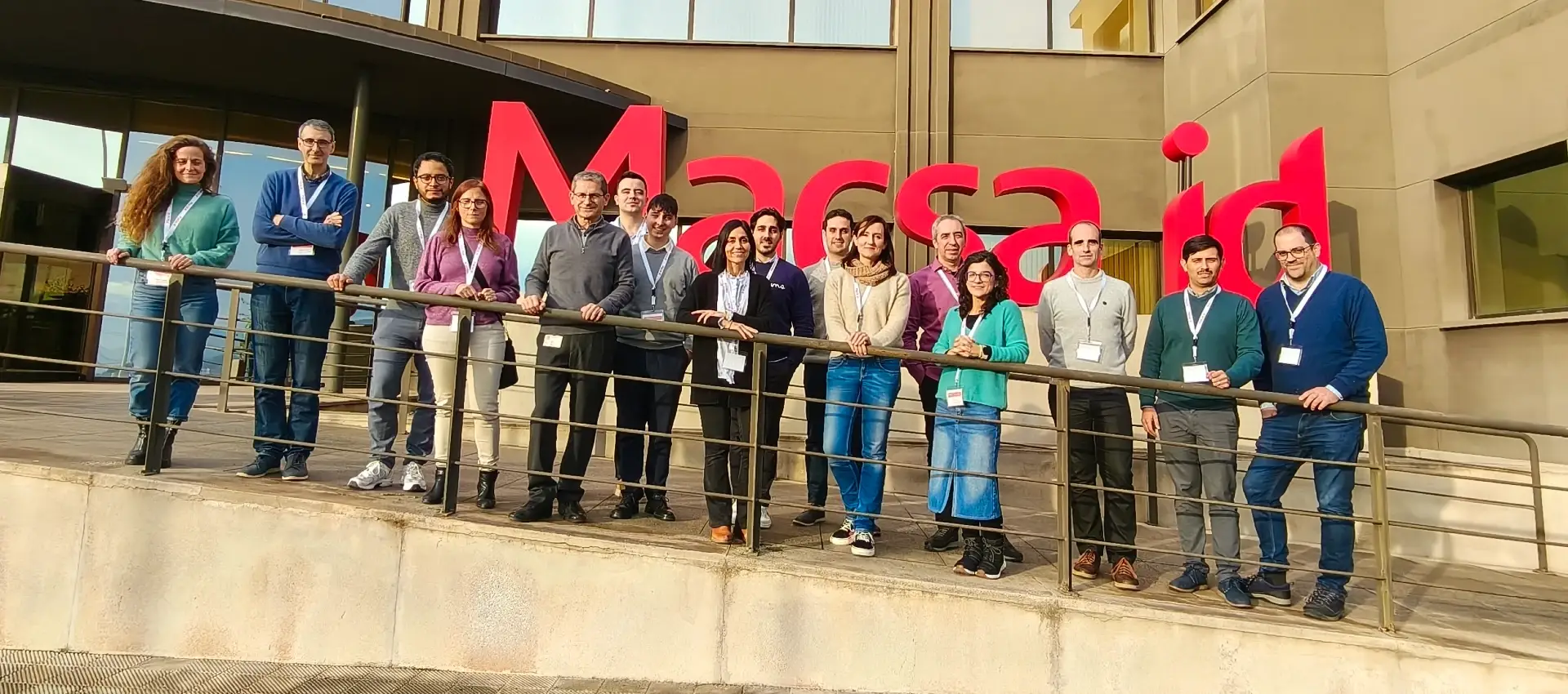
One of the milestones of the project has been the collaboration with MACSA to improve its industrial labelling and marking process. Thanks to the intelligent analysis and control system, accuracy and reliability increased significantly, reaching a failure detection rate of more than 95%.
In addition, the system identified the real origin of the incidents, confirming that they were not due to the label printing process, but to the reading phase afterwards, demonstrating the practical utility of artificial intelligence in production environments.
A Spanish industrial photonics ecosystem
Together with Izertis, STELA brings together six companies and three research centres to cover the entire value chain: from the laser source (FYLA) and the sensor head (EXOM) to integration in industrial solutions (MACSA, AZUD, MAIER), with the scientific backing of TEKNIKER, the Autonomous University of Barcelona and the CSIC.
“For Izertis, this project reinforces our position in digitalisation, intelligent process control and the application of AI in industrial environments, and opens the door to new developments in advanced monitoring, artificial vision and data platforms applied to production”, say those involved in the initiative.
This project reinforces our position in digitalisation
Beyond technical advances, the project promotes more autonomous, efficient and sustainable production models: lower energy and material consumption, optimised cycle times and greater reliability.
It also contributes to the zero-defect manufacturing paradigm, fosters skilled employment and reinforces the development of a national ecosystem around photonics as a key technology for Industry 4.0.
The Izertis team highlights its achievements: “It has been a project with many technological challenges, but the expected results have been achieved, with the development of AI models and a system capable of identifying anomalies in both the signals and the outcome of the process”.
The expected results have been achieved, with the development of AI models and a system capable of identifying anomalies
With a duration of 33 months, STELA is part of Mission 2 of the Science and Innovation Missions 2022 Programme, within the CDTI's State Sub-programme for Public-Private Collaboration.
The solution has included validation in three representative applications: automotive backlit panels, water treatment filters and packaging with identification and traceability codes.