

Beyond SEO: building algorithmic trust

This analysis concludes the journey begun in the previous two publications, where we first explored how artificial intelligence is redefining the strategic role of consulting, and then how that transformation impacts marketing and communication through hybrid marketing and AI as the user’s digital representative.
The next step will be to understand how this evolution takes shape in specific strategies of eligibility and visibility — an area where a brand’s digital presence increasingly depends on the convergence of people, technology, and governance.
Within this new operating framework, the responsible integration of AI demands new technological roles, trained teams, and supervisory frameworks that ensure reliable, traceable information consistent with the organisation’s values. At the same time, visibility in the digital ecosystem relies on automated systems and structured data that enable artificial intelligence to prioritise and recommend one brand over another.
From this convergence emerges a key transformation: the evolution of traditional SEO towards optimisation models focused on response engines, where digital eligibility is built simultaneously for humans and machines
Strategy 1: From search to answer (AEO)
The way people find information on search engines is changing rapidly. When artificial intelligence delivers answers directly on the results page, the click ceases to be the starting point. In fact, according to SparkToro, more than 60% of global searches end without a click because users find what they need without leaving the search engine.
In 60% of searches, users find the answers directly in the search engine
This phenomenon is driving a strategic evolution from traditional SEO (focused on visibility) towards language model optimisation (LMO) and, ultimately, AEO (Answer Engine Optimisation).
The latter represents the next level: optimising content so that language models recognise and use it as a direct answer.
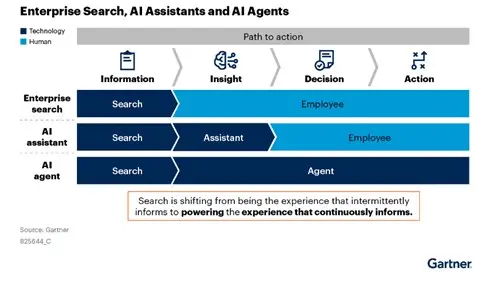
To achieve that brand “citability”, optimisation must be approached across four complementary axes:
- Structured content and semantics: The foundation of algorithmic eligibility lies in verifiable, structured, and contextualised content, replacing mass-produced output lacking purpose.
- Use of schemas: Implementing schema markup (such as JSON-LD, FAQ, HowTo, Organisation, etc.) facilitates AI models’ reading and interpretation of content.
- Semantic narrative: The focus is no longer on keyword density but on user intent and conceptual relationships, enabling language models to interpret and cite information coherently.
- Algorithmic trust: Answer optimisation depends not only on code but also on reputation. AI systems prioritise content from sources with authority, traceability, and credibility.
Strategy 2: Content governance, the invisible support of trust
Fostering algorithmic trust requires a robust, verifiable, and traceable information infrastructure, where data, systems, and models interact interoperably through accessible, public technical specifications:
- Interoperability and open standards: Keeping data updated and readable across multiple platforms is essential. Open standards like JSON, CSV, or XML establish common structures that AI can track, validate, and share reliably.
- Authority and traceability: Human validation by consultants and developers is vital to verify content provenance, ensuring authenticity, truthfulness, and respect for user rights. Guidelines implemented in 2025 by NIST and the OECD reinforce this need, highlighting human oversight as a pillar for data provenance and reliability.
Strategy 3: RAG (recovery augmented generation) governance
Built on this foundation of governance and structured content, the RAG strategy ensures AI systems use only verified, up-to-date internal information, avoiding outdated or irrelevant data.
The RAG strategy ensures that AI systems use only verified and up-to-date information
This approach promotes the use of up-to-date, transparent, and precise data, prioritising continuous repository refinement by eliminating redundant, obsolete, or trivial content.
In this model, human oversight remains central: consultants validate that the data used by AI aligns with corporate strategy and values, consolidating a lasting foundation of trust.
Conclusions
Artificial intelligence is structurally redefining the digital ecosystem and the way brands connect with their audiences. The emergence of AI agents acting as digital proxies for users is shifting the focus from traditional visibility to an essential new indicator: algorithmic trust, understood as the ability of an organisation to be selected and recommended by intelligent systems.
In this scenario, digital eligibility emerges as a strategic priority, and achieving it depends not only on online presence, but on the coherent integration of data governance, technical architecture and human oversight, ensuring traceability, interoperability and information quality across the digital ecosystem.
Achieving digital eligibility depends on combining governance, architecture, and human oversight
This shift has a profound impact on the areas of marketing and communication, where the user journey increasingly delegates the early stages of decision making to AI systems.
Brands must therefore evolve from traditional SEO to strategies based on response engines, language models and verifiable data, capable of dialoguing with selection and recommendation algorithms.
In this process, consultancy takes on a key role as an integrator of strategy, technology and ethics, guiding organisations in the responsible adoption of AI and the construction of sustainable models for visibility, trust, and digital reputation.
Article co-authored by Luisa Cáceres and Liseth Martínez.
Related articles: Marketing in the age of AI: a new responsibility y Hybrid marketing: how AI redefines the brand-user connection.